


Somebody asked me recently what the Effortless Healing Companion is.
A product? An app? A coaching programme with AI wrapped around it?
I heard myself say, before I'd thought about it:
it’s not a product. I think it’s a movement. It’s an idea. It’s barely even a thing you use.
I’ve been reflecting on why that particular response came out of me so fast.
The thing is, a product and a movement can look identical from the outside. Same screen, same login, same little icon on your phone.
The difference isn’t in what you can see. It’s in the question the builder was secretly asking while they built it.
A product asks: how do I get you to use this more?
Everything follows from that question. The notifications. The streaks. The little hooks that bring you back.
The whole quiet machinery is built to increase one number — your time, your attention, your return.
I don’t even say this with judgment anymore. It's just the physics of the thing. If you build to that question, you will build something that needs you to need it.
There’s a kind of AI being built everywhere right now whose entire architecture is designed to please you, to agree with you and to keep you there.
Because otherwise, why would you stay on the app?
A movement asks a different question.
It asks: how do I help you need this less and become someone different in the process?
That question builds the opposite machine. It builds restraint instead of hooks. It builds a thing that says less, not more. It builds something willing to lose your attention, even to frustrate you, because the point was never to hold your attention — the point was to reconnect with your body's own wisdom.
A product wants to be used. A movement wants to be outgrown.
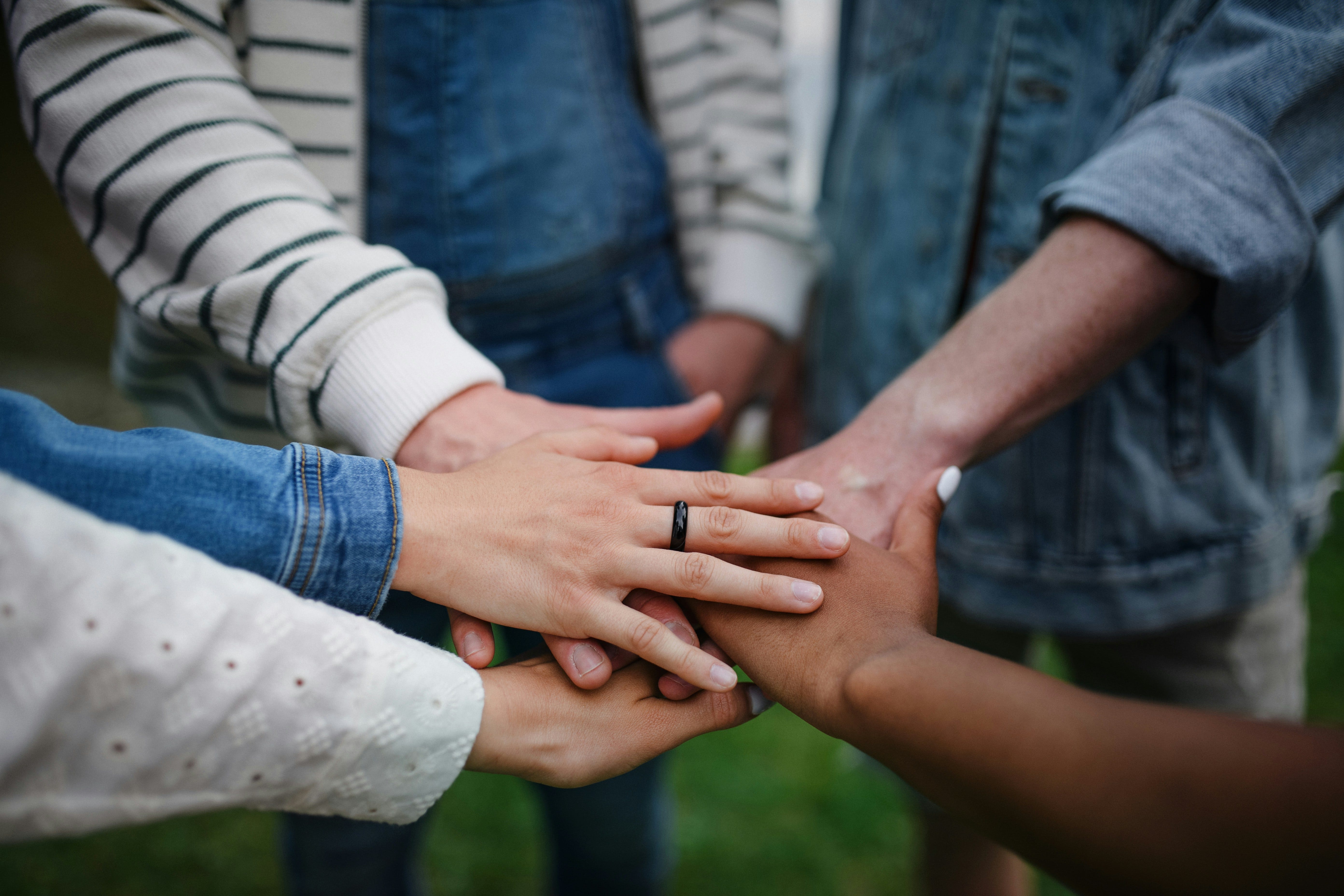
Here’s the part I only understood over time. A product is something you sell. A movement is something people carry.
When the women in the circle share in their own words what their bodies are actually feeling, that is the thing.
It’s not about my code or my framework. It’s about them.
The Companion feels like it understands you because it was shaped by women like you.
Women who had stopped talking about their illness because the people around them were tired of hearing it, who were quietly grieving the life they'd hoped for, who just wanted someone to care.
Their voices are the soul of it. I didn’t build a product and then find users for it. I created a space, and the space filled with women, and the women became the movement.
That’s why I keep flinching at the word “customer.” A customer buys a finished object and takes it home. What I've been building is closer to a collaboration in which a woman joins something unfinished and helps make it real.
You are not buying the Companion.
You are joining a small, stubborn idea:
that women who have been doing everything right and still feel terrible deserve a kind of support that doesn’t ask them to perform, doesn’t keep score, and doesn’t try to keep them.
A product is finished when it is sold. I used to like the sense of closure which accompanies this idea.
But a movement is never finished, and I’ve made an unlikely peace with that. It’s never finished because it lives in people, and people keep changing, and so the thing keeps changing with them.
We launched a version that has limitations. A woman closed it in frustration last week and told me why, and we changed it. That’s not a product failing. That's what a movement does.
This is the real reason I couldn’t call it a product, even though, technically, you could. Because a product would make it easy for me to perfect, launch, and walk away from.
A movement asks something more uncomfortable of me: to keep showing up, to keep listening, to let the people in it shape it, to never quite be finished.
To build something I don’t fully control.
And maybe that’s the deepest difference of all. A product is something you own. A movement is something you serve.
I didn’t set out to build an app. I set out to change two words.
Healing — so it could mean something other than more effort, more protocols, more proving.
And AI — so it could mean something other than a machine designed to keep you coming back for more.
Mostly, I wanted both words to be allowed to mean: a place where a woman feels met, not managed.
You don’t build that. You start it, and then you tend to it, and then you trust it to outgrow you. Which, if you’ve been reading along these last weeks, you’ll know is exactly what I’ve been learning to do anyway.
Is it a product? You could call it that. There’s a login. There’s a thing on your phone.
But if you ask me what it really is, I’ll tell you what I blurted out before I thought about it.
It’s a movement. It’s an idea. It’s a few women deciding, together, that healing was allowed to feel like coming home instead of going to war.
And you don’t buy your way into that. You’re just invited.
The Coming Home Circle is where this movement lives — a small group of women who join something unfinished and help shape what it becomes. The Companion is at its heart.
The next circle opens in August; small, by invitation, a handful of women. If you want to be among the first to hear when the door opens, join the waitlist


